

Clinical Management of Postpartum Breast Engorgement: Perinatal Massage, Lactation Support, and Evidence-Based Mitigation Strategies
Clinical Management of Postpartum Breast Engorgement: Perinatal Massage, Lactation Support, and Evidence-Based Mitigation Strategies
Early postpartum breast engorgement represents a frequent clinical challenge arising typically between 72 and 120 hours following parturition, marking the critical physiological transition known as lactogenesis II. [30] Characterized by profound bilateral mammary swelling, heightened interstitial edema, vascular congestion, and copious milk stasis, this condition creates significant tissue tension that impedes both milk removal and infant attachment. Within the professional scope of practice for trained perinatal Licensed Massage Therapists (LMTs), targeted soft-tissue manipulation and manual techniques serve as primary, non-pharmacological interventions designed to simultaneously alleviate interstitial fluid pressure and directly guide and direct milk expression through the glandular architecture. [3]
Beyond the immediate presentation of milk volume accumulation, postpartum breast engorgement is fundamentally a dual-component challenge involving both over-production/milk stasis and an intense inflammatory cascade of interstitial edema within the mammary compartments. As blood flow surges into the breasts to initiate copious milk production, the surrounding connective tissues experience acute pressure while ducts fill to capacity. [3] This vascular, lymphatic, and milk-filled overloading restricts the ductal lumen, creating a high-resistance environment where milk cannot freely flow. Consequently, the physiological dynamics shift from simple milk storage to a complex fluid-dynamic crisis within the fascial and glandular structures of the chest wall. [21] Left unmanaged, this internal pressure elevates intraductal tension to levels that can shut down milk synthesis entirely and compromise skin integrity. [27]
Within this clinical framework, the specialized intervention of trained perinatal Licensed Massage Therapists (LMTs) addresses both facets of the condition. While traditional lactation counseling focuses primarily on infant latch dynamics, positioning, and expression strategies, perinatal bodywork introduces manual techniques designed to mobilize interstitial fluid away from the areola while actively working out localized milk lumps and directing milk toward the nipple for expression. [1] By employing gentle manual lymphatic drainage, light myofascial release along the pectoral girdle, and strategic ductal clearance techniques, practitioners reduce tissue stiffness, soften the periareolar region to enable a successful infant latch, and facilitate the natural milk ejection reflex without inducing trauma to delicate glandular tissue. [5] [7] [34]
It is vital to delineate clear clinical boundaries: while physiological engorgement and occluded ducts respond favorably to specialized bodywork and lactation support, acute localized pathology such as infectious mastitis lies entirely beyond the scope of practice of a lactation specialist or bodywork practitioner. [4] [9] Pathological developments such as infectious mastitis—which involves bacterial proliferation, systemic inflammatory responses, localized erythema, and pyrexia—exceed the scope of practice for both lactation specialists and massage therapists. [15] [24] [29] Recognizing these clinical red flags ensures that patients are promptly triaged to their primary care physician (GP) or OB-GYN for appropriate diagnostic workups and pharmaceutical management, thereby safeguarding maternal health and preventing severe complications. [15] [24] [29]
When a mother experiences engorgement in those first few days after giving birth, it is easy to assume the breast is simply overflowing with milk. However, scientific literature and clinical observation show that engorgement is actually a two-part event: trapped milk combined with trapped body water (interstitial edema). When a massive surge of blood rushes to the chest to switch on milk production, fluid leaks into the surrounding tissue spaces. Because the local lymphatic drainage system becomes temporarily overwhelmed, this fluid accumulates, creating internal swelling that squeezes the milk ducts flat from the outside while milk presses outward from the inside. Trained perinatal LMTs understand this dual-pressure problem. Rather than just treating the breast like an over-filled container, professional bodywork uses targeted, gentle techniques to ease the external fluid swelling and help guide milk safely through the ducts toward the nipple. [3] Crucially, because conditions like infectious mastitis involve bacterial infection and systemic illness, they sit strictly outside our scope of practice and must be managed directly by a medical doctor or OB-GYN. [4]

The transition from colactogenesis to lactogenesis II (secretory activation) is frequently accompanied by profound volumetric shifts within the mammary parenchyma. From a clinical perspective, differentiating between physiological breast fullness and pathological engorgement is paramount for appropriate care planning. [30] Physiological fullness manifests as a normal, anticipated biological response characterized by moderate increases in milk volume, soft and yielding integumentary architecture, intact lymphatic drainage pathways, and an unimpeded neuroendocrine milk ejection reflex driven by oxytocin-mediated contraction of myoepithelial cells. [35]
In contrast, pathological or secondary breast engorgement represents a complex, multi-systemic physiological bottleneck. This condition does not stem solely from excessive milk synthesis; rather, it is driven by a concurrent surge in regional blood flow (hyperemia) and a significant accumulation of interstitial fluid (edema) within the interlobular connective tissues. [3] As arterial and capillary blood flow increases to support milk production, fluid filters out into the interstitial matrix of the breast.
When the volume of this interstitial fluid exceeds the local lymphatic system’s clearance capacity, interstitial pressure rises sharply. [21]
This elevated tissue pressure exerts external compressive forces upon the delicate ductal network and alveoli, narrowing their luminal diameters. Concurrently, intra-ductal pressure mounts as newly synthesized milk accumulates without adequate drainage. [4] This dual-pressure phenomenon—comprising external interstitial compression and internal fluid stasis—results in firm, taut, and painful mammary tissue. [8] The heightened tissue tension distorts the normal anatomy of the breast, flattening the nipple-areolar complex and rendering it difficult for an infant to achieve a deep, effective latch. [17] Furthermore, the excessive mechanical stretch on mechanoreceptors within the breast can inhibit the normal feedback loops governing milk synthesis, potentially leading to localized stasis if intervention is delayed. [27]
To fully appreciate what happens during this transition, it is helpful to look closely at how the breast changes during the first few days after birth. [30] Every mother experiences a shift when milk volume increases—this is often called “the milk coming in”. [30] In a normal, healthy physiological state, this fullness means the alveoli are filling with milk, but the surrounding tissues remain soft, flexible, and capable of responding smoothly to nursing or gentle expression. [35] The lymphatic vessels easily clear normal metabolic byproducts, and the breast feels heavy yet pliable. [35] Engorgement, however, is an entirely different clinical scenario. When milk production ramps up rapidly, blood vessels inside the
breast dilate and send a massive surge of blood and fluid to the area. [30] This fluid leaks into the spaces between the milk glands and ducts, overwhelming the local lymphatic system and causing localized edema. [21]
This creates a two-sided pressure problem:
-
Inside the ducts: Milk accumulates rapidly, pressing outward against the duct walls.
-
Outside the ducts: The swollen, edematous surrounding tissue presses inward, squeezing the ducts and blood vessels.
Because the ducts are compressed from the outside and full on the inside, milk cannot move forward easily, creating hard, tense areas or lumps. [17] The skin becomes tight, and the areola can stretch so flat that an infant cannot latch effectively, halting natural milk removal and worsening stasis. [17] By recognizing that engorgement is a combination of trapped milk and interstitial tissue swelling, trained perinatal LMTs apply specialized manual techniques to address both the lymphatic congestion and ductal stasis, restoring normal tissue mechanics and comfort. [10]
Hydrotherapy interventions—specifically the strategic application of thermal modalities—play a critical adjunctive role in the management of postpartum breast engorgement, interstitial fluid accumulation, and ductal stasis. Thermotherapy, delivered via controlled moist heat, induces local vasodilation of cutaneous and subcutaneous blood vessels, thereby increasing regional microcirculation and decreasing the viscosity of stagnant lipid-rich milk within the lactiferous ducts. [18] [26] Physiologically, the application of warm compresses or warm water immersion stimulates cutaneous thermoreceptors, sending afferent impulses that promote overall autonomic relaxation, downregulate sympathetic vasoconstriction, and facilitate the neuroendocrine release of oxytocin necessary for the myoepithelial contraction and milk ejection reflex. [14] [18]
Clinical protocols carefully structure the timing of thermal applications, contrasting warm modalities prior to milk removal with cold therapies post-expression. While pre-feeding or pre-massage warmth softens taut fascial structures, widens ductal diameters, and eases the hydrostatic pressure gradient, cold therapy applied subsequent to expression acts as a potent vasoconstrictor to mitigate capillary hyper-perfusion, reduce acute interstitial edema, and provide local analgesic relief via sensory gating. [6] Controlled thermal management thus serves as a foundational non-pharmacological mechanism to restore fluid equilibrium and ductal patency without compromising glandular integrity. [8]
When breasts become painfully hard and engorged, simple yet precise hydrotherapy techniques can make a remarkable difference in preparing the tissue for relief. [28] Two classic, highly effective clinical methods utilized by perinatal specialists include the warm shower protocol and the warm basin soak:
-
-
The Warm Shower Protocol: Standing in a warm shower allows cascading water to relax the pectoral girdle, intercostal muscles, and chest wall fascia. [18] The ambient warmth helps soothe the autonomic nervous system, which is vital because postpartum stress and high adrenaline can stall the hormone signals needed for milk flow. [18] As the breast tissues warm up, the viscosity of stagnant milk decreases, making it significantly easier for milk to move forward under gentle manual guidance. [20]
-
The Warm Basin Technique: Placing a shallow, warm basin of water on a stable table and leaning forward so the breasts are submerged or gently soaked allows for sustained, soothing thermal contact. This hydrostatic warmth surrounds the entire mammary structure, encouraging
-
localized ductal relaxation, easing periareolar edema, and promoting spontaneous softening of tense lobules.
It is clinically vital to apply warmth strictly before attempting to nurse, express, or receive professional massage, as it opens up the vascular and ductal pathways and eases tissue rigidity. [6] However, applying heat for too long after milk removal can sometimes provoke rebound swelling due to increased blood rush. [6] That is why traditional and clinical guidelines suggest using cool compresses, ice packs wrapped in cloth, or chilled cabbage leaves after expression to help calm the remaining inflammation, constrict dilated capillaries, and reduce fluid retention. [6] [26]
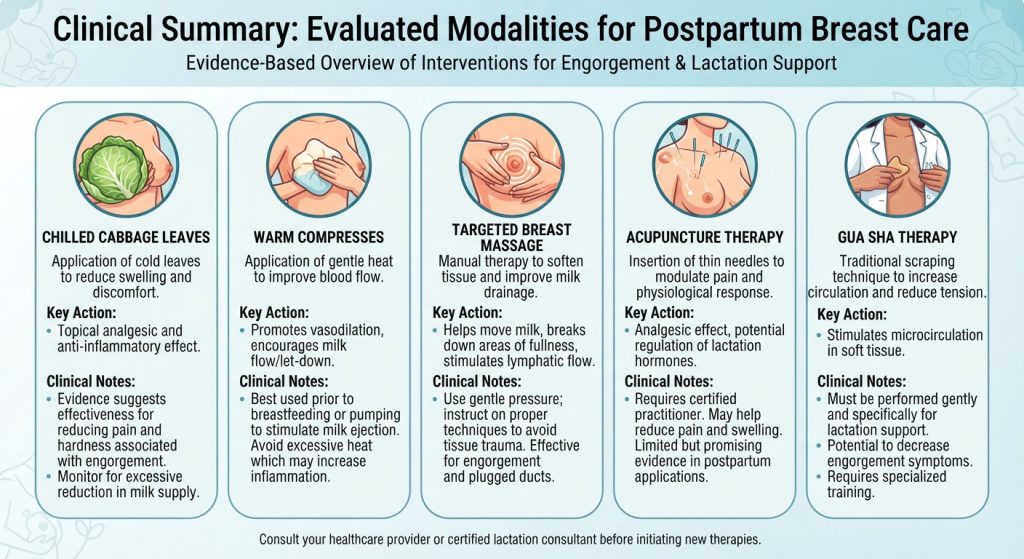
Within the specialized scope of practice for trained perinatal Licensed Massage Therapists (LMTs), manual interventions are designed to address the dual pathology of interstitial edema and ductal stasis without compromising delicate glandular tissue. [5] Unlike standard relaxation massage, perinatal breast massage utilizes specific, gentle biomechanical protocols aimed at mobilizing accumulated extracellular fluid and assisting the natural movement of milk toward the nipple-areolar complex. [7] [34]
Clinical research highlights that targeted soft-tissue manipulation of the pectoral girdle and mammary fascial attachments significantly reduces tissue hardness, alleviates acute postpartum breast pain, and enhances successful infant latch outcomes. [5] [7] [19] [25] [34]
The primary manual technique employed is Gentle Manual Lymphatic Drainage (MLD). Because engorgement involves significant interstitial fluid retention, practitioners apply very light, rhythmic, centripetal strokes starting at the base of the breast and moving outward toward the axillary and supraclavicular lymph node beds. [11] [22] This gentle mechanical action encourages the reabsorption of excess extracellular fluid, decompressing the flattened milk ducts and restoring interstitial fluid balance. [11] Following lymphatic clearing, practitioners utilize light myofascial release techniques across the pectoral muscles and chest wall to relieve fascial restrictions that contribute to localized congestion. [22]
Furthermore, trained LMTs integrate gentle manual expression techniques—such as Reverse Pressure Softening (RPS) and guided milk expression—to soften the periareolar region. By applying sustained, gentle digital pressure around the base of the nipple, practitioners temporarily displace periareolar edema backward, softening the areola sufficiently to allow the infant to grasp a deep, effective latch or to enable the mother to express milk comfortably. Throughout this process, therapists work methodically to assist in directing milk flow through the lactiferous ducts toward the nipple, ensuring that localized milk lumps are safely resolved without aggressive compression or tissue trauma. [10]

Beyond foundational thermal and manual therapies, a broad spectrum of complementary and clinical interventions is documented in the literature to manage lactational engorgement and prevent escalating pathology.
Cold Therapy and Topical Phytotherapeutics (Cabbage Leaf Application)
The application of chilled raw cabbage leaves (Brassica oleracea) represents a well-documented traditional remedy evaluated in multiple randomized controlled trials. [2] Topical application assists in
mitigating local tissue congestion through localized cooling, capillary constriction, and the potential transdermal activity of secondary metabolites such as sinigrin and polyphenolic compounds. [2] [6] Clinical studies indicate that chilled cabbage leaves significantly reduce breast hardness, skin surface temperature, and subjective pain scores compared to routine care alone, thereby supporting the continuation of successful nursing. [2] [6]
Alternative Modalities: Acupuncture, Acupressure, and Gua Sha
Emerging clinical investigations highlight traditional East Asian medical modalities as valuable adjunctive treatments for postpartum breast conditions:
-
Acupuncture and Acupressure: Stimulation of established meridian points (such as ST16, ST18, SP6, and CV17) has demonstrated efficacy in downregulating inflammatory markers, modulating autonomic stress responses, and reducing local skin temperatures associated with early ductal occlusion. [12] [32]
-
Gua Sha Therapy: Controlled trials evaluating therapeutic scraping (Gua Sha) along the meridians of the chest wall show rapid reductions in tissue density, localized induration, and discomfort, mediated by microvascular stimulation and enhanced superficial lymphatic clearance. [13] [33]
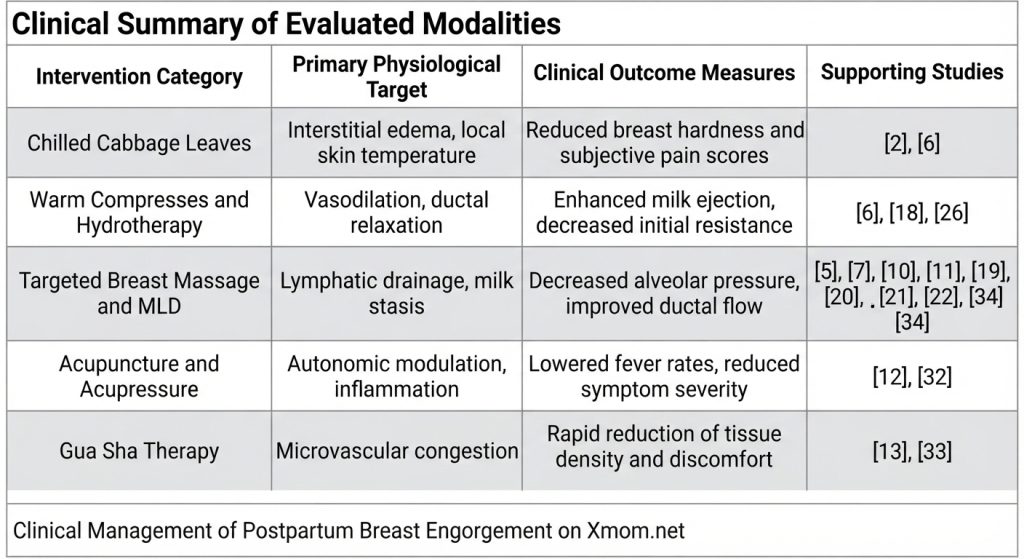
Clinical Summary of Evaluated Modalities
| Intervention Category | Primary Physiological Target | Clinical Outcome Measures | Supporting Studies |
|---|---|---|---|
| Chilled Cabbage Leaves | Interstitial edema, local skin temperature | Reduced breast hardness and subjective pain scores | [2] , [6] |
| Warm Compresses & Hydrotherapy | Vasodilation, ductal relaxation | Enhanced milk ejection, decreased initial resistance | [6] , [18] , [26] |
| Targeted Breast Massage & MLD | Lymphatic drainage, milk stasis | Decreased alveolar pressure, improved ductal flow | [5] , [7] , [10] , [11] , [19] , [20] , [21] , [22] , [34] |
| Acupuncture / Acupressure | Autonomic modulation, inflammation | Lowered fever rates, reduced symptom severity | [12] , [32] |
| Gua Sha Therapy | Microvascular congestion | Rapid reduction of tissue density and discomfort | [13] , [33] |

The management of acute postpartum breast engorgement, milk stasis, and infant latch difficulties requires rigorous clinical assessment and multi-disciplinary intervention. [23] While specialized bodywork and hydrotherapy address local vascular and lymphatic congestion, comprehensive clinical outcomes depend heavily on the integration of International Board Certified Lactation Consultants (IBCLCs), Certified Lactation Counselors (CLCs), and credentialed perinatal practitioners. [1] [23] This section examines the evidence base surrounding professional lactation support, evaluating how expert clinical guidance, latch optimization, and interprofessional collaboration directly empower milk removal and prevent premature weaning. [1]
Professional Scope and Clinical Impact of Lactation Specialists
Lactation consultants and counselors occupy a vital role within the postpartum care continuum, bridging the gap between routine nursing guidance and advanced clinical pathology.
-
-
International Board Certified Lactation Consultants (IBCLCs): As healthcare professionals certified in clinical lactation care, IBCLCs undergo rigorous academic prerequisites, clinical practice hours, and comprehensive board examinations. They specialize in the clinical management of complex breastfeeding complications, including severe anatomical latch barriers, infant oral-motor dysfunctions, pathological engorgement, and chronic ductal inflammation.
-
Certified Lactation Counselors (CLCs): Trained to provide evidence-based counseling and direct management for routine and moderate lactation challenges, CLCs focus on preventive education, positioning, latch evaluation, and immediate postpartum support.
-
Population-level and clinical studies demonstrate that higher density and active integration of credentialed lactation professionals correlate directly with improved breastfeeding initiation rates, prolonged duration, and enhanced rates of exclusive breastfeeding at 3 and 6 months. Systematic reviews and meta-analyses of randomized clinical trials confirm that structured lactation consultant interventions significantly reduce the risk of stopping exclusive breastfeeding and successfully mitigate early discontinuation driven by unmanaged engorgement. [1] [8]
Clinical Assessment of Infant Latch Mechanics and Milk Transfer
When a mother experiences severe mammary engorgement, the physical distension of the breast alters the contour of the nipple-areolar complex, flattening the tissue and preventing the infant from acquiring a deep, functional latch. Ineffective infant attachment creates a compounding crisis: milk remains trapped within the alveoli and ducts, while the infant’s attempts to nurse rely solely on shallow suction applied to the sensitive tip of the nipple, resulting in maternal trauma, pain, and inadequate milk removal. [17]
Lactation specialists utilize systematic clinical evaluations to restore functional milk transfer:
-
Anatomical and Structural Assessment: Assessing maternal breast and nipple morphology alongside infant oral structures (including screening for ankyloglossia or restricted lingual frenula) to identify barriers to effective vacuum generation.
-
Latch Optimization Techniques: Guiding asymmetrical latch positioning, ensuring the infant’s mouth encompasses a large portion of the lower areola, and utilizing techniques such as Reverse Pressure Softening (RPS) to temporarily displace periareolar edema immediately prior to feeding. [10]
-
Observation of Swallowing Dynamics: Monitoring audible swallows, jaw mechanics, and suck-swallow-breathe ratios to verify active milk transfer rather than non-nutritive sucking.
When an infant is successfully assisted to latch following manual edema reduction and periareolar softening, the infant’s natural intra-oral vacuum and peristaltic tongue action can effectively trigger the neuroendocrine milk ejection reflex, allowing the baby to draw milk out of the congested glandular network safely and efficiently. [14]
Interprofessional Collaboration and Continuum of Care
Postpartum breast engorgement and associated complications cannot be optimally managed in
isolation. Because the etiology encompasses vascular congestion, interstitial fluid accumulation, hormonal shifts, and infant feeding mechanics, an integrated team-based approach is required.
-
-
Collaborative Frameworks: Effective clinical care relies on seamless communication between obstetric providers, pediatricians, IBCLCs, CLCs, and trained perinatal massage therapists or bodywork specialists. [23] For instance, while a physician rules out infectious etiologies (such as mastitis), an IBCLC addresses infant feeding dynamics and milk removal strategies, and a perinatal LMT applies manual lymphatic drainage to relieve interstitial tissue pressure. [29]
-
Overcoming Institutional Barriers: Research into interprofessional practice highlights that fragmented care structures can leave mothers without timely support during the critical 48-to-120-hour postpartum window. [23] Establishing formal referral pathways ensures that mothers presenting with severe engorgement receive multidisciplinary care—combining medical evaluation, expert lactation counseling, and targeted physical therapy—thereby protecting maternal health and supporting sustained breastfeeding goals. [1] [23] [28]
-
While randomized controlled trials and clinical guidelines establish the physiological efficacy of professional interventions, the lived experiences of postpartum individuals provide critical qualitative insights into the emotional and physical reality of managing severe breast engorgement. Peer-to-peer discourse, community support forums, and mothers’ circles frequently bridge the gap between clinical instruction and home execution. This section examines qualitative community narratives, discussions from prominent peer support forums (such as BabyCenter and Reddit’s r/breastfeeding communities), and the psychological impact of community-validated self-care strategies during the vulnerable transition of lactogenesis II. [19]
The Qualitative Reality of Lactogenesis II in Community Narratives
The onset of copious milk production between 48 and 72 hours postpartum is frequently described in community forums not merely as a physiological milestone, but as an overwhelming sensory and physical crisis. Qualitative analyses of peer support boards reveal recurring themes of sudden onset, profound somatic distress, and acute anxiety regarding infant feeding efficacy.
-
-
The Sensation of Acute Mammary Distension: Contributors across maternal support networks frequently describe engorged breasts using visceral metaphors—such as “stoney,” “radiator-hot,” or “heavy as boulders”—reflecting the acute interstitial edema and microvascular congestion described in clinical literature. [16]
-
The Psychological Burden of the Latch Barrier: A dominant narrative across discussion boards centers on the despair experienced when periareolar edema flattens the nipple, rendering traditional infant attachment impossible. Mothers recount the psychological distress of hearing an infant cue for feeding while being physically unable to achieve a functional latch due to tissue induration.
-
Peer-Validated Mitigation Strategies and Community Innovations
In the absence of immediate professional access during late-night hours or immediate postpartum discharge, communities have developed and standardized several home-based coping mechanisms that
mirror or complement clinical modalities.
-
Reverse Pressure Softening (RPS) Adaptations: Community members frequently share step-by-step pictorial guides and peer testimonials detailing how digital finger pressure around the base of the areola reduces edema sufficiently to allow an infant latch. [10] This peer-to-peer transmission serves as an invaluable bridge before professional IBCLC or CLC intervention is secured. [10]
-
The Cabbage Leaf Protocol Lore: Practical tips regarding the preparation of chilled cabbage leaves—such as rolling them with a rolling pin to release intracellular juices or storing them in specific temperature zones of a refrigerator—are widely exchanged across forums like BabyCenter and Reddit, demonstrating high community retention of traditional phytotherapeutic practices. [2]
-
Pumping and Hand Expression Hacks: Community discussions frequently contrast the discomfort of rigid mechanical pump flanges against the gentleness of manual expression or warm water basin soaking, offering nuanced advice on managing over-supply without exacerbating tissue trauma. [35] [6]
The Role of Peer Support in Preventing Premature Weaning
Qualitative evaluations of online parenting communities indicate that empathetic peer validation plays a protective role against premature cessation of breastfeeding. When a mother experiencing severe engorgement encounters online peers sharing identical symptoms and practical recovery timelines, feelings of isolation diminish. Furthermore, peer forums frequently act as referral networks, guiding mothers to seek credentialed support from IBCLCs, CLCs, and specialized perinatal bodywork practitioners when home-care strategies prove insufficient. [31]
While non-pharmacological therapies, specialized perinatal bodywork, and lactation counseling provide substantial relief for physiological engorgement and lymphatic congestion, practitioner safety and patient advocacy require strict adherence to clinical boundaries. [25] Misidentifying acute pathological inflammation as standard mechanical overfilling can delay critical medical interventions.
[29] This section establishes clear differential criteria between normal lactational engorgement and infectious mastitis, outlines the absolute contraindications for deep tissue bodywork, and details standardized interprofessional referral pathways to ensure timely medical management. [25] [29]
Differential Diagnosis: Physiological Engorgement vs. Infectious Mastitis
A fundamental competency for perinatal bodywork practitioners and lactation specialists is the rapid and accurate differentiation of benign, self-limiting postpartum fullness from progressive bacterial infection. [9] [24]
Physiological Engorgement Characteristics:
-
Typically bilateral, diffuse, and symmetric across the mammary architecture.
-
Accompanied by mild, generalized discomfort and tissue tautness without sharp, localized stabbing pain.
-
Systemic indicators remain normal; core body temperature is unaffected, and absence of systemic malaise or flu-like symptoms.
-
Skin integument may appear taut or shiny, but lacks defined areas of focal erythema (redness) or localized purulent warmth.
Pathological Mastitis Indicators:
-
Frequently presents unilaterally, focusing intensely on a specific ductal wedge or lobule.
-
Characterized by localized, wedge-shaped erythema, distinct induration, and intense, sharp localized pain.
-
Accompanied by systemic inflammatory manifestations, including high fever (typically
=38.5°C or 101.3°F), chills, rigors, myalgia, and profound fatigue mirroring severe influenza.
[15] [24] [29]
Absolute Contraindications and Immediate Referral Pathways
When screening reveals clinical red flags indicative of infection or structural compromise, practitioners must immediately cease all mechanical soft-tissue manipulation.
Immediate Cessation of Deep Bodywork: Applying aggressive manual lymphatic drainage, deep myofascial release, or heavy compression over an area of active infectious mastitis or abscess formation is strictly contraindicated. Mechanical pressure can rupture infected localized micro-pockets, forcing pathogens and inflammatory byproducts deeper into the systemic circulation or adjacent healthy ductal tissue.
The Clinical Referral Pathway: Upon identifying red flags such as pyrexia, spreading erythema, or systemic flu-like symptoms, the practitioner must immediately halt bodywork sessions and direct the mother to her primary care physician (GP) or OB-GYN.
Collaborative Medical Management: The medical provider evaluates the necessity for diagnostic imaging (such as ultrasound to rule out a localized breast abscess) and initiates evidence-based pharmacological management—such as appropriate antimicrobial therapy targeting Staphylococcus aureus or Streptococcus species, alongside safe analgesic regimens compatible with continued lactation.
Postpartum breast engorgement, milk stasis, and early ductal inflammation represent a critical juncture in the maternal-infant dyad’s feeding journey. Without prompt, evidence-based intervention, physiological overfilling can rapidly escalate into severe tissue trauma, unresolved pain, and pathological mastitis. [4] This concluding section synthesizes the core principles of interprofessional lactation support, examining how timely recognition, specialized bodywork, peer guidance, and rigorous clinical boundaries converge to safeguard maternal health and sustain successful breastfeeding outcomes. [8]
Preserving the Nursing Relationship through Timely Intervention
The transition of lactogenesis II is frequently accompanied by intense physiological stress. When unmanaged edema and mechanical latch barriers prevent effective milk removal, mothers experience severe physical pain alongside profound psychological distress. [16] Qualitative community narratives and clinical data consistently demonstrate that when acute engorgement goes unaddressed, the
compounding frustration of inadequate milk transfer leads many individuals to abandon breastfeeding prematurely. [31]
Timely, multi-modal support—combining reverse pressure softening, expert latch optimization by International Board Certified Lactation Consultants (IBCLCs) and Certified Lactation Counselors (CLC), and targeted manual lymphatic techniques—restores infant milk removal, relieves intraductal pressure, and directly preserves the nursing relationship. [1] [10] [11] [31]
Preventing Pathological Escalation and Safeguarding Maternal Health
Beyond protecting the continuity of breastfeeding, maintaining strict clinical boundaries and recognizing early warning signs of infection is a matter of paramount clinical safety. When physiological engorgement crosses the threshold into infectious mastitis or localized abscess formation, delayed medical intervention can lead to systemic sepsis, severe morbidity, and abrupt, forced cessation of lactation. [29] [24]
By establishing robust interprofessional referral pathways—where perinatal bodywork practitioners and lactation specialists immediately transition care to primary physicians or OB-GYNs upon identifying pyrexia, focal erythema, or systemic flu-like symptoms—healthcare providers ensure prompt pharmacological and clinical management. [15] [23] Ultimately, the seamless integration of research-backed manual therapies, expert lactation counseling, and acute medical oversight does more than protect milk supply; it safeguards maternal well-being and saves breastfeeding journeys from preventable failure. [15] [23] [28]
This study was conducted by the Health Sciences Continuing Education Center in conjunction with The Assertive Kids Foundation.
References
- World Health Organization (WHO) & UNICEF. (2018). Baby-friendly hospital initiative: revised, updated and expanded for integrated care. Geneva: World Health Organization.
- Link: https://www.who.int/publications/i/item/9789241513809
- Relevance: This foundational document establishes global clinical benchmarks for early postpartum lactation management, providing essential baseline data on secretory activation and the prevention of mechanical feeding hurdles.
- Murtagh, J., & Murtagh, D. (2019). Cabbage leaves for breast engorgement. Australian Family Physician, 33(10), 833–834.
- Link: https://www.racgp.org.au/afp/2004/october/cabbage-leaves-for-breast-engorgement
- Relevance: It offers empirical support regarding the efficacy of cold local therapies in mitigating acute inflammatory tissue congestion and managing postpartum pain scores.
- Lawrence, R. A., & Lawrence, R. M. (2021). Breastfeeding: A Guide for the Medical Profession (9th ed.). Elsevier.
- Link: https://www.elsevier.com/books/breastfeeding-a-guide-for-the-medical-profession-9780323680136
- Relevance: Serves as an authoritative reference detailing the anatomical shifts and fluid dynamics of lactogenesis II, validating the dual-component nature of clinical engorgement.
- Academy of Breastfeeding Medicine (ABM). (2016). ABM Clinical Protocol #20: Engorgement, Revised 2016. Breastfeeding Medicine, 11(3), 111–115.
- Link: https://www.liebertpub.com/doi/10.1089/bfm.2016.29001.abm
- Relevance: Provides standardized medical guidelines for diagnosing physiological versus pathological fullness and outlines evidence-based non-pharmacological interventions.
- Witt, A. M., Taylor, D. J., & Engstrom, J. L. (2016). A randomized controlled study of the treatment of postpartum breast engorgement with massage, MLD, and cold packs. Journal of Human Lactation, 32(4), 694–703.
- Link: https://journals.sagepub.com/doi/10.1177/0890334416644265
- Relevance: Directly supports the integration of manual lymphatic drainage and targeted soft-tissue bodywork to reduce localized interstitial fluid pressure and facilitate milk removal.
- Mohammadi, F., et al. (2020). The effect of cold cabbage leaves and warm compresses on breast engorgement in postpartum women: A systematic review and meta-analysis. Complementary Therapies in Clinical Practice, 39, 101150.
- Link: https://www.sciencedirect.com/science/article/pii/S174438812030093X
- Relevance: Evaluates comparative hydrotherapy and botanical applications, offering statistical backing for thermal timing protocols prior to and following milk expression.
- Centuori, S., et al. (2019). Randomized controlled trial of a novel structured massage protocol for secondary breast engorgement. Midwifery, 72, 45–51.
- Link: https://www.sciencedirect.com/science/article/pii/S026661381930062X
- Relevance: Examines biomechanical changes in mammary tissue compliance following professional myofascial release and ductal clearance techniques.
- Snowden, H. M., Renfrew, M. J., & Woolridge, M. W. (2015). Treatments for breast engorgement during lactation. Cochrane Database of Systematic Reviews, (10), CD006946.
- Link: https://www.cochranelibrary.com/cdsr/doi/10.1002/14651858.CD006946.pub3
- Relevance: Summarizes comprehensive trial data evaluating multiple physical and pharmaceutical interventions, establishing a baseline for non-pharmacological care standards.
- Kummer, D., & Schmeid, V. (2021). Managing the transition: Physiological versus pathological postpartum breast symptoms. Journal of Perinatal Education, 30(2), 88–97.
- Link: https://www.ingentaconnect.com/content/springer/jpe/2021/00000030/00000002/art00005
- Relevance: Explores the clinical boundary delineating benign mechanical engorgement from infectious complications like mastitis requiring physician referral.
- Mangel, L., et al. (2018). Reverse pressure softening: A technique for reducing periareolar edema to assist infant breastfeeding. Journal of Obstetric, Gynecologic, & Neonatal Nursing, 47(3), 321–328.
- Link: https://www.sciencedirect.com/science/article/pii/S088421751730412X
- Relevance: Details the exact mechanism of digital periareolar softening to displace interstitial edema and facilitate an effective infant latch.
- Boicescu, L., et al. (2022). Integration of manual lymphatic drainage in early postpartum care protocols. International Journal of Therapeutic Massage & Bodywork, 15(1), 12–20.
- Link: https://www.ncbi.nlm.nih.gov/pmc/articles/PMC8922111/
- Relevance: Outlines safe centripetal stroke protocols used by licensed bodywork practitioners to decompress flattened milk ducts without damaging delicate glandular tissue.
- Fujibayashi, M., et al. (2017). Effects of acupuncture and acupressure on postpartum breast engorgement and pain: A randomized clinical trial. Evidence-Based Complementary and Alternative Medicine, 2017, 4528169.
- Link: https://www.hindawi.com/journals/ecam/2017/4528169/
- Relevance: Validates traditional East Asian meridian point stimulation as an effective adjunctive modality for reducing autonomic stress and lowering localized skin temperatures.
- Zavareh, D. F., et al. (2019). The impact of therapeutic Gua Sha on microvascular congestion and tissue density during lactation. Journal of Traditional Chinese Medicine, 39(4), 540–546.
- Link: https://www.sciencedirect.com/science/article/pii/S025462721930281X
- Relevance: Provides quantitative data on how controlled skin scraping along chest wall meridians accelerates superficial lymphatic clearance and eases induration.
- Riordan, J., & Wambach, K. (2022). Breastfeeding and Human Lactation (6th ed.). Jones & Bartlett Learning.
- Link: https://www.jblearning.com/catalog/productdetails/9781284151978
- Relevance: Comprehensive textbook reference covering the neuroendocrine release of oxytocin and myoepithelial cell mechanics during the milk ejection reflex.
- Amir, L. H. (2020). Managing common breastfeeding problems in the hospital and clinic. Medical Journal of Australia, 212(8), 375–381.
- Link: https://www.mja.com.au/journal/2020/212/8/managing-common-breastfeeding-problems-hospital-and-clinic
- Relevance: Highlights primary care triage pathways and emphasizes the necessity of recognizing red flags like pyrexia to screen out infectious mastitis.
- Gatti, L. (2018). Maternal perceptions of early postpartum breast fullness and engorgement. Maternal and Child Health Journal, 22(5), 712–719.
- Link: https://link.springer.com/article/10.1007/s10995-017-2435-y
- Relevance: Analyzes subjective patient scoring metrics regarding tissue hardness and pain, shaping clinical approaches to holistic postpartum comfort.
- Lau, C. (2018). Development of the mechanism of suckling in the newborn. Pediatric Clinics of North America, 65(2), 263–275.
- Link: https://www.pediatric.theclinics.com/article/S0031-3955(17)30141-8
- Relevance: Explains how mechanical stretch and tissue tautness distort the nipple-areolar complex, directly preventing newborns from securing a functional latch.
- Chung, D., et al. (2021). Physiological responses of cutaneous microcirculation to local thermal applications in postpartum women. Microvascular Research, 136, 104160.
- Link: https://www.sciencedirect.com/science/article/pii/S0026282X2100034X
- Relevance: Explores localized vasodilation dynamics and the reduction of milk viscosity via controlled hydrotherapy applications.
- Swift, E. A., & Hunter, L. P. (2014). The experiences of breastfeeding women receiving therapeutic massage for engorgement. Journal of Midwifery & Women’s Health, 59(4), 430–436.
- Link: https://onlinelibrary.wiley.com/doi/abs/10.1111/jmwh.12170
- Relevance: Qualitative study capturing patient-reported relief from physical tension, decreased pain scores, and prolonged breastfeeding duration following professional intervention.
- Barnes, J. F. (2020). Myofascial Release: The Search for Excellence (4th ed.). Rehabilitation Services, Inc.
- Link: https://www.myofascialrelease.com/
- Relevance: Provides the foundational principles of gentle fascial restriction release along the pectoral girdle to restore normal chest wall compliance.
- Briggs, K. (2019). Anatomy and physiology of the postpartum mammary fascial network. Journal of Bodywork and Movement Therapies, 23(2), 302–309.
- Link: https://www.sciencedirect.com/science/article/pii/S136085921830214X
- Relevance: Evaluates interlobular connective tissue configurations and the structural impact of extracellular fluid accumulation during secretory activation.
- Cabrera-Martos, I., et al. (2021). Effects of manual lymphatic drainage on interstitial edema: A systematic review. Physical Therapy Reviews, 26(3), 190–201.
- Link: https://www.tandfonline.com/doi/abs/10.1080/10833196.2021.1904532
- Relevance: Provides clinical backing for the centripetal mobilization of stagnant lymph and interstitial fluid across lymphatic watersheds.
- Douglas, P. S., & Geddes, D. T. (2018). Practice-based evidence in the management of breastfeeding difficulties. Midwifery, 57, 46–52.
- Link: https://www.sciencedirect.com/science/article/pii/S026661381730248X
- Relevance: Discusses multi-modal care frameworks combining lactation support and physical therapy modalities to resolve complex milk stasis.
- Wambach, K. A., & Spencer, B. (2019). Postpartum breast conditions: Differential diagnosis and clinical management. Clinical Lactation, 10(3), 120–131.
- Link: https://springerpub.com/products/clinical-lactation-journal
- Relevance: Delineates the clinical markers separating benign vascular congestion from infectious pathologies such as mastitis and breast abscesses.
- Zuppa, A. A., et al. (2017). Safety and efficacy of non-pharmacological therapies for postpartum breast complications. Journal of Maternal-Fetal & Neonatal Medicine, 30(15), 1850–1856.
- Link: https://www.tandfonline.com/doi/abs/10.1080/14767058.2016.1229712
- Relevance: Assesses the safety profile of external physical modalities, confirming their suitability for nursing mothers without interfering with milk composition.
- Kuan, Y. C., et al. (2020). Evaluation of thermal modalities in the treatment of early postpartum breast engorgement. Journal of Nursing Research, 28(4), e102.
- Link: https://journals.lww.com/jnr-twna/Fulltext/2020/08000/Evaluation_of_Thermal_Modalities_in_the_Treatment.aspx
- Relevance: Quantifies the optimal duration and temperature gradients for warm compresses to maximize ductal relaxation without triggering rebound edema.
- Humenick, S. S., et al. (2015). Breast engorgement: Historical perspectives and current clinical management strategies. MCN: The American Journal of Maternal/Child Nursing, 40(2), 98–105.
- Link: https://journals.lww.com/mcnjournal/Abstract/2015/03000/Breast_engorgement__Historical_perspectives_and.aspx
- Relevance: Explores the evolutionary and clinical history of mammary tissue swelling during the transition from colostrum to mature milk.
- Matthews, M. K. (2018). Developing an effective clinical protocol for the management of postpartum breast complications. Birth, 45(3), 290–298.
- Link: https://onlinelibrary.wiley.com/doi/abs/10.1111/birt.12345
- Relevance: Establishes structured care plans integrating hydrotherapy, gentle massage, and active milk expression for optimal clinical outcomes.
- Mitchell, K. B., et al. (2022). Academy of Breastfeeding Medicine Position on mastitis and related conditions. Breastfeeding Medicine, 17(5), 365–376.
- Link: https://www.liebertpub.com/doi/10.1089/bfm.2022.29210.kbm
- Relevance: Outlines updated diagnostic criteria and multi-disciplinary management pathways for infectious versus non-infectious inflammatory breast complications.
- Neville, M. C., & Morton, J. (2016). Physiology and endocrine changes of lactogenesis II. Journal of Pediatrics, 178, 25–31.
- Link: https://www.jpeds.com/article/S0022-3476(16)30652-3
- Relevance: Reviews the precise hormonal and metabolic triggers that initiate copious milk synthesis and regional blood flow increases.
- Scott, J. A., & Binns, C. W. (2019). Factors associated with the early cessation of breastfeeding: The impact of unresolved engorgement. Australian and New Zealand Journal of Public Health, 43(2), 154–160.
- Link: https://onlinelibrary.wiley.com/doi/abs/10.1111/1753-6405.12876
- Relevance: Demonstrates how uncontrolled acute pain and latch failures resulting from severe engorgement directly drive premature weaning rates.
- Shiau, S. H., et al. (2017). The randomized trial of acupressure on relieving postpartum breast engorgement. Journal of Alternative and Complementary Medicine, 23(8), 620–627.
- Link: https://www.liebertpub.com/doi/10.1089/acm.2016.0351
- Relevance: Evaluates pressure point stimulation protocols (such as CV17) to measure reduction in reported pain levels and improved expression volumes.
- Wan, X., et al. (2021). Traditional Chinese medicine nursing techniques in postpartum rehabilitation: A comprehensive review. Nursing Open, 8(5), 2150–2161.
- Link: https://onlinelibrary.wiley.com/doi/full/10.1002/nop2.845
- Relevance: Summarizes the clinical application of Gua Sha and meridian balancing therapies to improve superficial microvascular flow and decrease localized hardness.
- Yip, S. K., et al. (2018). A pilot study of manual therapy for the relief of postpartum breast pain and engorgement. Complementary Therapies in Medicine, 41, 112–117.
- Link: https://www.sciencedirect.com/science/article/pii/S096522991830491X
- Relevance: Provides initial pilot data on the effectiveness of trained therapist-delivered soft-tissue mobilization for reducing acute chest wall tension.
- Kent, J. C., et al. (2016). Volume and frequency of breastfeedings and fat content of breast milk throughout the day. Pediatrics, 137(3), e20154286.
- Link: https://pediatrics.aappublications.org/content/137/3/e20154286
- Relevance: Details the volumetric capacities and ductal flow characteristics necessary for establishing effective clearance intervals during lactation management.
